
The Performance and Its Audience
The Man Who LaughsPublic audiences turn Gwynplaine into a commodity, while their changing reactions reveal the class boundaries of entertainment.
increasing Bearing strength in each event
 decreasing
Bearing strength in each eventdecreasingA Cheap Show
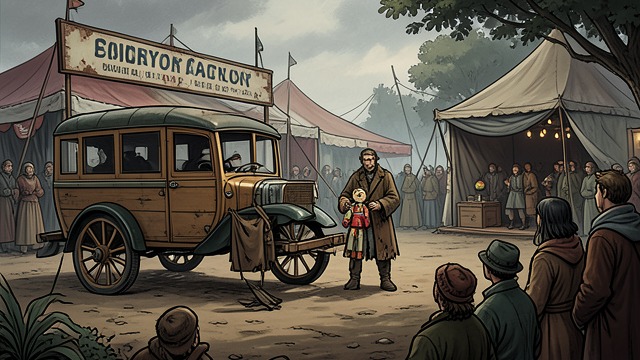
A Cheap Show
Entertainment for the poor
Ursus performs plays and demonstrations for crowds at fairs.
The troupe earns small sums from ordinary spectators.
Their work depends on direct contact with people outside polite society.
A livelihood in motion
The van moves when one market is exhausted.
The performers have no permanent theatre or settled protection.
Their mobility is both freedom and insecurity.
Chaos Vanquished
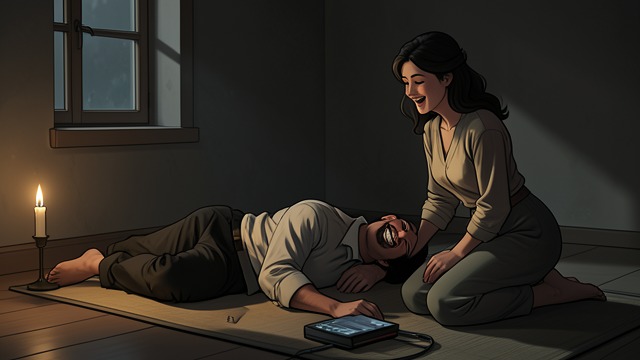
Chaos Vanquished
Darkness gives way to a face
The play stages a struggle between the human figure and chaos.
Dea’s song seems to restore the fallen man.
Gwynplaine’s final appearance unexpectedly provokes laughter.
Art altered by reception
The crowd responds more strongly to his face than to the drama.
Ursus accepts the income even as he regrets the comic effect.
Public response reshapes the work’s meaning.
A Performer Made Famous
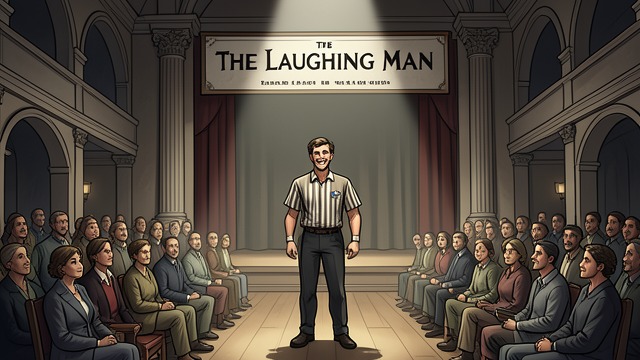
A Performer Made Famous
Recognition grows
The Laughing Man becomes known beyond the small towns.
Crowds seek out the Green Box and its unusual performer.
His public identity gradually overtakes his personal name.
Fame does not equal respect
The show earns money but does not erase contempt for actors.
Gwynplaine is applauded and kept socially distant.
Success offers a livelihood without social equality.
A Noble Spectator
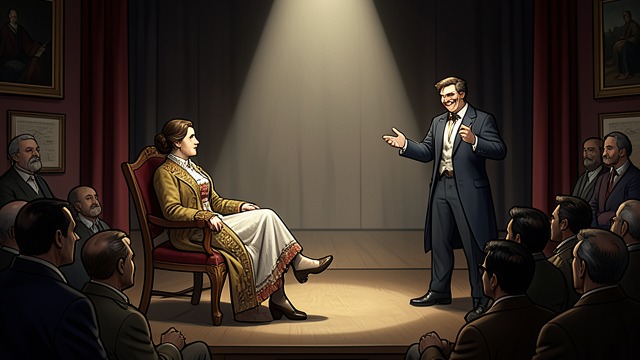
A Noble Spectator
A class boundary crossed
Josiana enters the low-priced theatre and occupies the reserved box.
Her wealth changes the audience’s attention before the play concludes.
The spectacle briefly makes noble and poor spectators share a room.
Desire follows attention
Josiana becomes fascinated by Gwynplaine.
Her presence makes the performer a subject of private court intrigue.
The stage connects the fairground to the aristocratic household.
The Audience Disappears
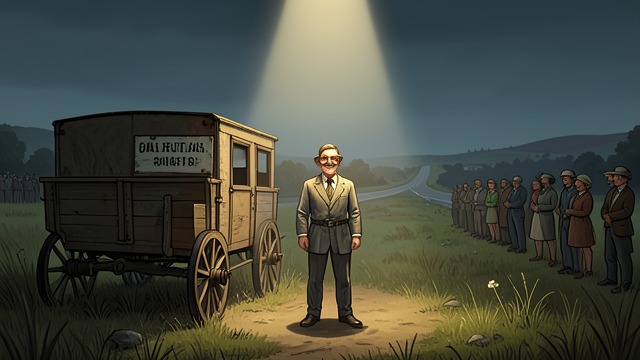
The Audience Disappears
The fairground is swept clean
The authorities remove the caravans and close the troupe’s performance space.
The crowd that once gathered around Gwynplaine is gone.
His fame cannot stop the destruction of the place that sustained it.
Isolation replaces applause
Gwynplaine searches the inn and finds no one.
The public performer becomes a solitary man seeking his family.
The ending exposes the transience of audience attention.
During the troupe’s early performances on the road
During the first major success of the Green Box
By 1704, after repeated touring
On Josiana’s first visit to the Green Box
The night Gwynplaine returns to the empty fairground
